
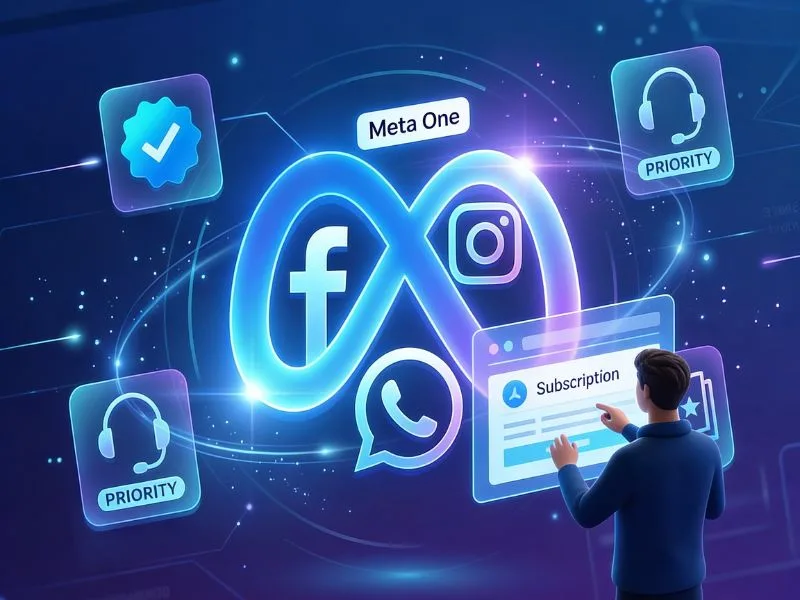
Meta has officially launched Meta One, a subscription service that marks a major shift in how Facebook, Instagram, and WhatsApp will operate. Instead of relying solely on advertising revenue, Meta is now offering paid tiers that unlock new features, customization options, and advanced AI tools. For South Africans, this development raises important questions about affordability, accessibility, and whether the benefits outweigh the costs.
Meta One began rolling out globally at the end of May 2026. South African users can already access the basic subscription tiers for Instagram, Facebook, and WhatsApp. More advanced AI-driven plans are still being tested in select countries, but Meta has confirmed that these will eventually reach broader markets, including South Africa.
Pricing is structured across different tiers. Instagram Plus and Facebook Plus cost around $3.99 per month, while WhatsApp Plus is slightly cheaper at $2.99. For those interested in AI tools, Meta One Plus is priced at $7.99, and the Premium tier offering advanced reasoning and image/video generation comes in at $19.99. Business-focused plans are more expensive, with Meta One Essential at $14.99 and Meta One Advanced at $49.99. Converted into rand, these subscriptions range from roughly R55 to R900 per month, depending on the tier.
Meta One promises several advantages. Everyday users can enjoy greater personalisation, such as custom themes, fonts, and reactions, along with insights into who rewatched their Stories. WhatsApp Plus offers more pinned chats, premium stickers, and even custom ringtones. For businesses and creators, the higher tiers provide analytics, boosted reach, impersonation protection, and scheduling tools, features that could be particularly valuable for South African entrepreneurs and content creators looking to grow their digital presence.
The biggest drawback is cost. In a country where many households are already under financial pressure, paying monthly fees for social media enhancements may not be realistic. There’s also the risk of creating inequality between free and paid users, with those who subscribe gaining visibility and reach advantages. Another concern is fragmentation; Meta now has multiple subscription models (Meta Verified and Meta One), which could confuse users. Finally, privacy questions remain, as more personal data will inevitably be tied to subscription services.
Meta One represents a turning point in how social media platforms are monetised. For South Africans, it offers exciting opportunities for businesses and creators to expand their reach, but it also introduces new costs that may not be accessible to everyone. Whether Meta One becomes a game-changer or simply another paid add-on will depend on how users here balance the value of its features against the realities of their budgets.
The question isn’t just whether to subscribe, but whether these new features truly enhance connection, creativity, and community in a way that justifies the price.